
Local Citation Building Services: How to Choose The Best Citation Builders
Have you ever searched for your own business online, only to find an old address or the wrong phone number staring back at you?
It’s a more common problem than you might think. In my 20 years as a digital marketing professional, I’ve seen how these small errors can cause big headaches. Keeping your business details accurate and consistent across the internet isn’t just about looking professional, it helps you earn customer trust and achieve better search rankings.
A local citation is simply any online mention of your business’s Name, Address, and Phone Number, which we call “NAP” for short. A BrightLocal study from 2018 found that 80% of consumers lose trust in local businesses if they see incorrect or inconsistent contact details online. Getting these details right is a vital first step for your local SEO success.
If you run a business from a physical shop or serve a specific local area, you need customers to find you easily. Local citation building services are designed to help with exactly that.
I’m going to walk you through the different types of citation building services, from hands-on manual options to more automated approaches. Together, we’ll find the right fit for your business needs and budget.
Manual Local Citation Building Services

Image Source: BrightLocal
Opting for manual citation building gives you the most direct control over your business’s online information. It’s a hands-on approach that puts you, not software, in charge of your digital presence.
What manual local citation building is
Manual local citation building involves creating, managing, and updating your business listings on various online platforms yourself. This means you or your team will visit each directory site one by one to input your details, rather than relying on automated tools.
The main advantage here is direct oversight. You personally ensure your Name, Address, and Phone Number (NAP) are perfectly consistent everywhere, giving you complete control over how your business is presented to the world.
How manual citation building works
The manual process is methodical and follows several key steps.
-
Audit existing citations: First, you need to see where your business is already listed online. A pro-tip I always share is to use a tool like Semrush’s Listing Management or Whitespark’s Local Citation Finder to get a quick overview. This helps you spot inconsistencies and prevent creating duplicate listings.
-
Select target directories: Create a list of high-value citation sources. Focus on directories that are relevant to your industry and location. For UK businesses, this should always include sites like Yell, Thomson Local, and Yelp.co.uk.
-
Search for existing listings: Before creating a new one, always check if your business already has a profile on the target directory.
-
Claim and verify: If a listing exists, you’ll need to claim it. This usually involves a verification step to prove you own the business. This might be done through:
-
Email verification, often requiring a business domain.
-
A phone call with an automated code.
-
A postcard sent to your physical address with a verification code.
-
-
Create new listings: For directories where your business isn’t listed, you’ll need to create a new profile from scratch by filling out their submission form.
-
Maintain records: Keep a detailed spreadsheet of all your submissions. To make this process more secure and manageable, I recommend using a password manager like 1Password or LastPass to store login details safely. The global password manager market was valued at over £2 billion in 2025, showing just how vital these tools have become.
The golden rule is to ensure your NAP details are identical everywhere. Consistency is what builds trust with search engines.
Pros and cons of manual citation building
Pros:
-
Complete control: You have the final say on how and where your business information appears.
-
Accuracy and consistency: Direct involvement means fewer errors slip through the cracks.
-
Permanence: Manual listings are permanent. They don’t disappear if you stop paying for a service.
- No platform limitations: You can submit to any directory you want, including niche or industry-specific ones that automated tools might miss.
-
Enhanced customisation: You can often add more detailed information, like photos and service descriptions, which automated feeds might not support.
Cons:
-
Time-intensive: Submitting to just 30 directories can take between 25-50 hours of work. For a business owner whose time is valuable, this represents a significant opportunity cost.
-
Tedious process: Let’s be honest, filling out the same form dozens of times is one of the least glamorous tasks in SEO.
-
Verification logistics: Juggling phone calls, emails, and postcards from multiple platforms requires careful organisation.
-
Poor scalability: This method becomes nearly impossible to manage for businesses with multiple locations.
-
Delayed publication: While some directories are instant, others can take up to eight weeks to publish your listing.
Best use case for manual citation building
Manual citation building is a perfect fit for small businesses on a tight budget. It’s a cost-effective way to build a strong local SEO foundation without committing to monthly subscriptions.
It’s also the best method for businesses that need to be listed in specialised directories. Automated services are great for general coverage but often miss industry-specific sites. For example, a law firm needs to be on Avvo and Justia, while a tradesperson might get great leads from a site like Checkatrade.
Businesses looking for long-term stability also benefit from this approach. Once built, these listings are yours forever and won’t vanish if a subscription lapses.
In my experience, a hybrid strategy often works best. I advise clients to manually build listings on 30-50 of the most important core directories and then use other methods for broader distribution.
Before you start, make sure your website and Google Business Profile are fully optimised. These are the two most important assets in your local SEO toolkit.
Pay-As-You-Go Local Citation Building Services
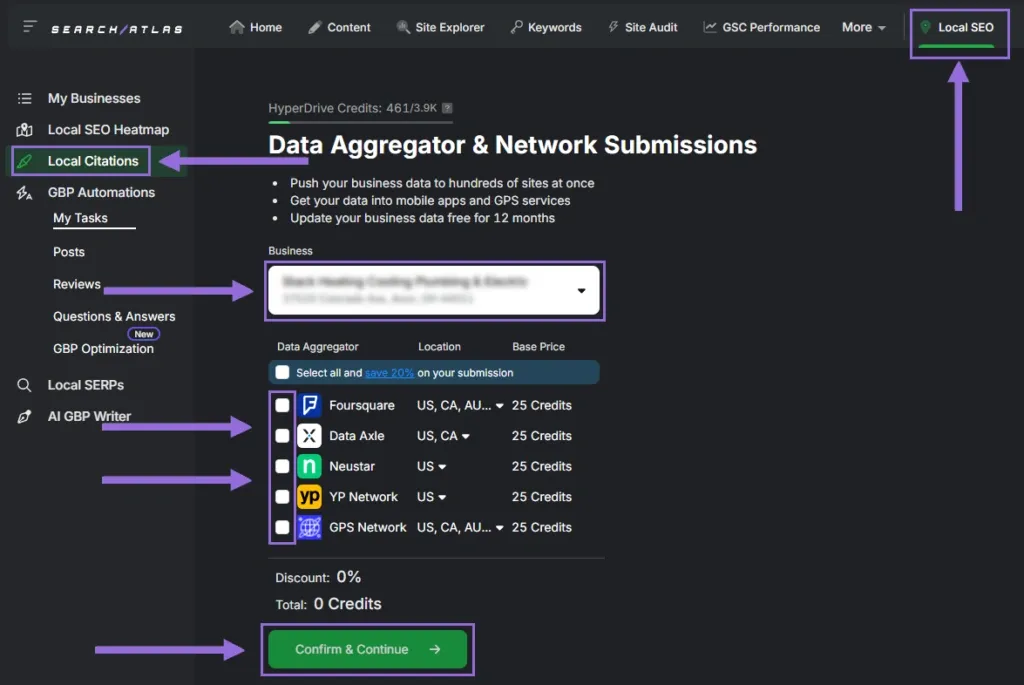
Image Source: Search Atlas
Pay-as-you-go citation services offer a flexible middle ground. They allow you to build out your online presence without being tied to long-term contracts, which is why they are so popular with small businesses and agencies.
What pay-as-you-go citation services are
With pay-as-you-go (PAYG) services, you only pay for the specific citations you want. Instead of a recurring monthly or annual fee, you are charged a one-time fee for each directory submission. This means you don’t have to keep paying just to keep your listings online.
Crucially, with PAYG services, you own the listings that are created. For instance, a provider like BrightLocal will give you the login details for every citation they build, so you always retain full control. This is a major difference from API-based solutions that effectively “rent” your listings to you.
Most PAYG providers offer a few key options:
-
Submissions to individual, specific directories.
-
Bulk packages that offer a discount for a larger number of submissions.
-
Data aggregator submissions, which are typically priced annually.
-
Citation cleanup services to fix incorrect existing listings.
How pay-as-you-go citation services work
The process is usually very straightforward. You start by selecting the directories where you’d like to be listed, or you can choose a pre-made package. After providing your business information, the service’s team manually submits your details to each chosen platform.
Providers like BrightLocal and Whitespark typically give you a dashboard where you can track the progress of your submissions and see when the listings go live.
Pricing varies, but here’s a general idea of what to expect per citation:
-
BrightLocal: Prices range from £1.59 to £2.54 per site, with discounts available for bulk orders.
-
Loganix: Costs are around £3.97 per citation, also with volume discounts.
-
Whitespark: Offers a one-time fee per citation or pricing for custom campaigns.
Submissions to the main data aggregators are usually priced as an annual fee. For example, BrightLocal charges around £95 per year to submit to the major data aggregator networks.
One common pitfall to watch out for is the cost of updates. If your business details change, you will likely have to pay an additional fee to have your existing listings updated.
Pros and cons of pay-as-you-go citation services
Pros:
-
Low barrier to entry: You can start with a small budget and build citations gradually.
-
Complete ownership: You control your listings permanently, unlike subscription models where you are just renting them.
-
Flexible spending: You only pay for what you actually use.
-
Cost control: It’s easier to manage your expenses, which is great for businesses with fluctuating budgets.
-
No recurring fees: You won’t have ongoing payments just to keep your citations active.
-
Targeted approach: You can hand-pick the most relevant directories for your business.
Cons:
-
Surprise costs: Any updates or fixes to your listings will almost always cost extra.
-
Limited ongoing management: Once the listings are built, they are essentially unmanaged unless you pay for a separate monitoring service.
-
Budget planning challenges: It can be harder to predict your total costs compared to a fixed subscription.
-
Manual tracking needed: You are responsible for monitoring your citations to ensure they remain accurate over time.
-
Less automation: Updates require manual intervention rather than syncing automatically.
-
Complex verification: You may still have to handle parts of the verification process yourself.
Best use case for pay-as-you-go citation services
PAYG services are ideal for small businesses that need to manage their costs carefully. It allows them to invest in the most impactful directories first and expand their presence over time.
They are also a perfect match for businesses with stable information. If your name, address, and phone number rarely change, you can avoid the extra costs associated with frequent updates.
These services are also an excellent “exit strategy” for businesses looking to leave expensive subscription models. Companies like BrightLocal even offer specific services to help businesses move away from API providers like Yext, saving them from paying nearly £800 a year just to rent their own listings.
Agencies that manage multiple clients often find PAYG to be a lifesaver. It allows them to purchase citations on a client-by-client basis, which simplifies billing and avoids the complexity of juggling multiple subscriptions.
A balanced approach often yields the best results. Using PAYG services to secure high-quality, industry-specific directory listings, while using other methods for wider coverage, can give you the best of both worlds.
Automated Local Citation Services
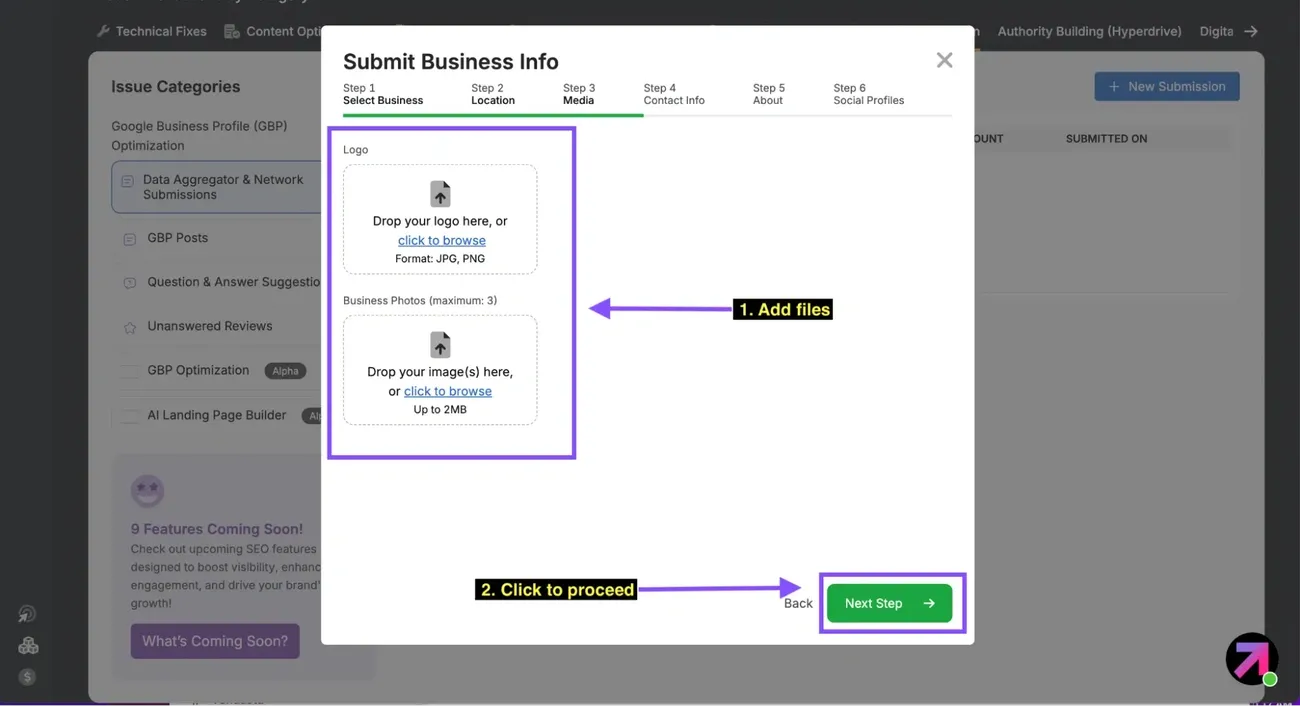
Image Source: Search Atlas
Automated local citation services are the tech-driven solution for managing your business information. They are designed to be fast and efficient, saving you a significant amount of time compared to doing the work by hand.
What automated citation services are
These services allow you to manage all of your business listings from a single dashboard. They operate on a subscription model, meaning you pay a monthly or yearly fee to keep your citations active and managed. Some of the biggest names in this space include Yext, Moz Local, and Semrush.
The core idea is efficiency. The software pushes your business information out to hundreds of directories at once with minimal effort from you. This frees you up to focus on other aspects of running your business.
Subscription packages for these services can range anywhere from around £200 to over £800 per year, depending on the provider and the level of features you need.
How automated citation services work
It all starts with a single master data form. You enter your business information once, and that becomes the single source of truth for all your listings. The platform then uses Application Programming Interfaces (APIs) to distribute this information across its network.
Think of an API as a secure messenger that delivers your data to each directory in a standardised format. Major players like Yext have built a powerful “Knowledge Network” of direct API connections, which allows them to update listings almost instantly.
There are two main types of APIs used:
Because of these direct connections, your information often goes live within hours, not weeks. Many platforms, like BrightLocal’s Citation Tracker, also include tools to find and suppress duplicate listings.
Most services provide a central dashboard where you can see the status of your listings, make updates across the entire network at once, and track performance. This centralised control is one of the biggest selling points of automation.
Pros and cons of automated citation services
Pros:
-
Time efficiency: It drastically cuts down the time spent on citation building. A manual campaign might take 20 hours a month, whereas an automated tool can be managed in under an hour.
-
Broad distribution: These tools can push your information to over 100-300 directories, far more than is feasible with manual work. Semrush, for example, connects to over 150 directories globally.
-
Speed of publication: Services like Yext can get your listings live almost instantly due to their direct partnerships.
-
Centralised management: You can update all your listings from one place with a single click.
-
Detailed reporting: You get a comprehensive overview of your listing status and performance.
-
Duplicate detection: Most platforms have features to automatically find and help you remove duplicate listings.
Cons:
-
Subscription dependency: This is the biggest drawback. When you stop paying, your listings can disappear or revert to old, incorrect information. A Whitespark study found 60% of listings disappeared or showed incorrect data after cancelling Yext.
-
Ongoing costs: Yearly fees can add up, running from under £100 to nearly £800 depending on the package.
-
Incomplete cleanup: Automated tools can sometimes miss complex duplicates or formatting errors.
-
Limited customisation: You typically have less control over how each individual listing is presented compared to manual submissions.
-
Fixed directory networks: You are limited to the directories included in the service’s network and can’t add niche sites.
Best use case for automated citation services
Automated services are most valuable for large organisations with many locations. A national retail chain like Tesco or a bank like HSBC would find it impossible to manage hundreds of listings manually.
They are also a great fit for businesses that frequently change their information. If you’re moving, rebranding, or regularly updating your opening hours, automation makes pushing those changes out incredibly simple.
Of course, these services are best for companies with a marketing budget that can accommodate the recurring subscription fees.
Ultimately, automation is about achieving broad coverage quickly. While a manual approach is better for targeted placement on high-value sites, automation excels at building a wide digital footprint fast.
Many experts recommend a hybrid approach. Use an automated service to get wide distribution, but also manually claim and manage your most critical listings, like Google Business Profile and other top-tier directories.
Aggregator-Based Citation Services
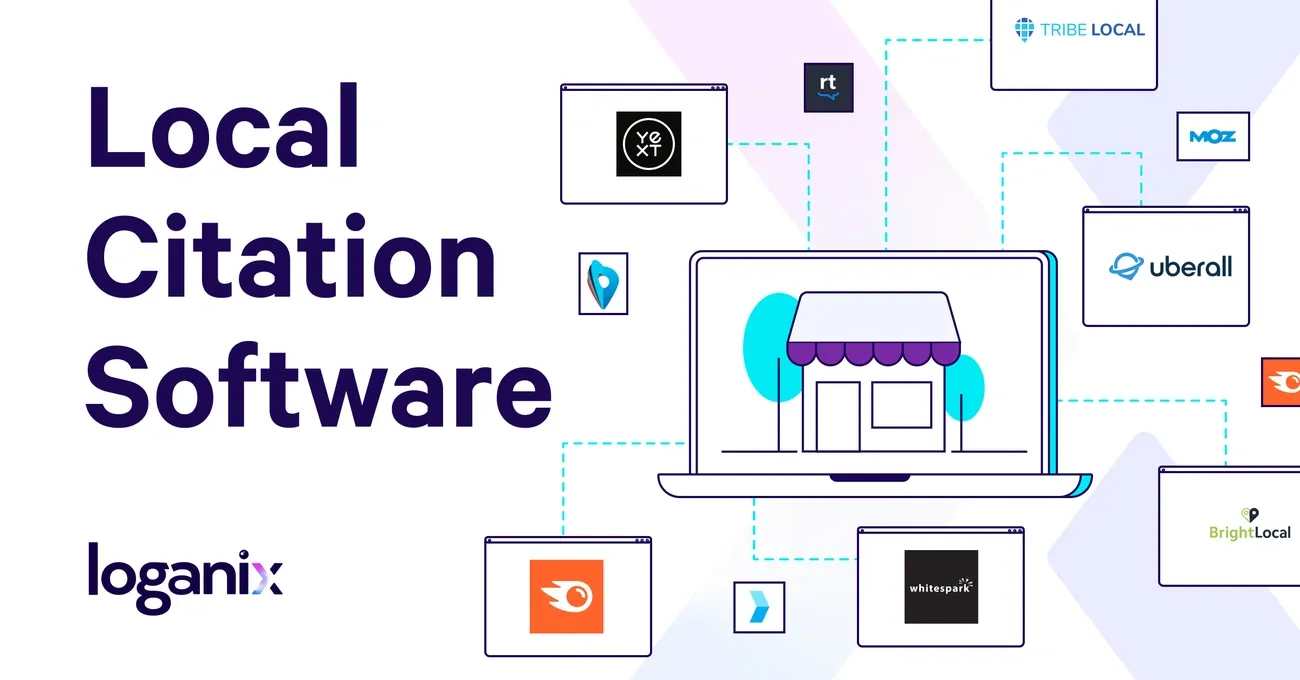
Image Source: Loganix
Aggregator-based services offer another powerful way to distribute your business information far and wide. They use large data networks to push your details to a huge number of platforms with very little effort.
What aggregator-based citation services are
Local data aggregators (LDAs) are large companies that collect, verify, and distribute business information. Think of them as the wholesalers of business data. In the UK, the main aggregators include Foursquare (which acquired Factual), Central Index, and Thomson Local.
These aggregators are a foundational part of the local search ecosystem. They supply data to thousands of other platforms, including search engines, online directories, mapping apps, and in-car navigation systems. Ensuring your information is correct with them is a crucial step.
How aggregator-based citation services work
The process starts when you submit your business information directly to an aggregator. They will then verify your details to ensure they are accurate before adding you to their massive database.
Once your data is in their system, it gets distributed out to the hundreds or thousands of publishers that rely on that aggregator’s data. It’s a “one-to-many” distribution model that gives you widespread visibility from a single submission.
This process can be a bit slow, it sometimes takes several months for the data to fully spread across the entire network. However, services like BrightLocal and Moz Local can simplify the process by submitting your information to multiple aggregators at once, saving you time and effort.
Pros and cons of aggregator-based citation services
Pros:
-
Wide distribution: A single submission can result in your business being listed on hundreds of smaller directories and apps.
-
Time efficiency: Submitting to all major aggregators yourself could take hours. A service can do it in about 20 minutes.
-
Cost effectiveness: Using a service like BrightLocal to submit to all major aggregators costs around £95, which is often cheaper than submitting to each one directly.
-
Free updates: Most services allow you to make free updates to your information for the first 12 months.
-
Consistency building: Spreading correct information is key, as a 2018 BrightLocal survey found 73% of consumers lose trust in brands with incorrect listings.
Cons:
-
Limited customisation: You have very little control over how your listing appears on the end-publisher’s website.
-
Unclaimed listings: Your listings are created but not claimed, which can leave them vulnerable to being edited by others.
-
Time-limited trust: After 12 months, your data loses its “trusted” status, and old, incorrect information can start to reappear.
-
Recurring costs: To maintain that trusted status, you need to renew your aggregator submissions annually.
-
Incomplete coverage: Aggregators don’t cover all important directories, so you will still need to do some direct or manual submissions.
Best use case for aggregator-based citation services
Aggregator services are a huge benefit for multi-location businesses. They provide a scalable way to manage listings that would be a nightmare to handle one by one.
They are also fantastic for new businesses that need to get their information out there quickly and build a foundational digital presence across a wide range of platforms.
Companies with busy teams but a reasonable budget also see great value. The time saved by using an aggregator service can be significant, freeing up your team to focus on other marketing efforts.
As with other methods, a combined approach often works best. I suggest using aggregators to create a wide, foundational layer of citations, while manually managing your most important listings to ensure they are fully optimised and under your direct control. This creates a balanced law-niche citation strategy.
All-in-One Local SEO Platforms with Citation Tools
Image Source: Proceed Innovative
Beyond services that only focus on citations, there are now comprehensive all-in-one local SEO platforms that bundle citation management with a whole suite of other essential tools.
What all-in-one local SEO platforms are
All-in-one local SEO platforms are designed to be a central hub for managing your entire local search presence. They combine tools for various tasks, including keyword research, rank tracking, analytics, and reporting, all within a single dashboard.
Popular examples include BrightLocal, Whitespark, Moz Local, and SE Ranking. These platforms go far beyond just building citations, often including powerful features for review management, social media integration, and detailed local rank tracking.
How they integrate citation building
On these platforms, citation building is treated as one crucial part of a larger, integrated strategy. They provide dashboards that make it easy to spot and fix NAP errors across the web.
Typically, their citation features include:
-
Building and managing citations across numerous directories.
-
Monitoring for NAP consistency and flagging errors for correction.
-
Identifying and helping you remove harmful duplicate listings.
-
Providing a “listing health” score and other insights to track your progress.
For example, Moz Local’s platform automatically syncs your listing data across major search engines, directories, and data aggregators. BrightLocal simplifies the process with a clear dashboard that shows the status of every citation, making it easy to see what needs attention.
Pros and cons of all-in-one platforms
Pros: Having all your tools in one place provides a single, integrated view of your local SEO performance. This synergy can also be more cost-effective than subscribing to multiple specialised tools separately.
Cons: These platforms can be a significant investment if you don’t end up using all the features. Sometimes, the individual tools lack the depth of a dedicated, specialist platform. For instance, while BrightLocal has a great rank tracker, a specialised tool like Local Falcon offers more granular geo-grid mapping.
Best use case for all-in-one platforms
Businesses with multiple locations get immense value from these platforms. BrightLocal, for example, allows you to track rankings and manage citations for different locations, all from one unified interface.
Companies that are serious about their local marketing strategy are also ideal candidates. SE Ranking’s platform, for instance, offers advanced features like multi-location rank tracking and white-label reporting, which is perfect for agencies managing client accounts.
These platforms are best suited for organisations that want to streamline the management of their local presence without having to juggle multiple tools and subscriptions.
Local Citation Building Services Comparison
|
Aspect |
Manual Citation Building |
Pay-As-You-Go Services |
Automated Services |
Aggregator-Based Services |
All-in-One Platforms |
|---|---|---|---|---|---|
|
Service Model |
Direct submission to each directory by hand |
One-time payment per citation submission |
Subscription model with automated distribution |
Distribution through data aggregator networks |
Comprehensive platform with multiple SEO tools |
|
Cost Structure |
Time investment (25-50 hours for 30 directories) |
£1.59-£3.97 per citation; Aggregator submissions ~£95/year |
£200-£800+ yearly subscription |
~£95 for all major aggregators yearly |
Varies by platform (e.g. £30-£100+/month) |
|
Key Benefits |
– Full control |
– Pay only when needed |
– Saves time |
– Broad reach |
– Single dashboard view |
|
Main Limitations |
– Takes too much time |
– Fees for updates |
– Subscription dependency |
– Limited customisation |
– Can be expensive |
|
Best Suited For |
– Small businesses with tight budgets |
– Small businesses |
– Large organisations |
– Multi-location companies |
– Multi-location businesses |
So, which local citation building service is the right one for you?
The best choice really depends on your specific business needs, budget, and overall marketing strategy. Manual building gives you ultimate control and permanent listings, but it demands a serious time investment. Pay-as-you-go services offer great flexibility for small businesses, while automated platforms provide unmatched efficiency for larger ones.
In my experience, the most successful strategies often blend these approaches. You might use data aggregators to build a wide base, then use manual submissions to perfect your listings on the most important, high-authority directories in your industry.
The one non-negotiable is NAP consistency. This is the cornerstone of effective local SEO. Even small variations in your business information can confuse search engines and, more importantly, your potential customers.
Take a moment to assess your business size, number of locations, how often your information changes, and your budget. This will point you toward the right solution.
While the world of local search is always changing, citations remain a fundamental building block for success. A well-executed strategy will build trust with both search engines and customers, leading to better rankings and more foot traffic through your door.